I studied arts administration and then made what I can only describe as a strategic transition into equine academia… But why the hell did I do that?
This didn’t feel earth shattering but more like… standing very calmly in a room full of passion-driven burnout and thinking, “Yeeeeah, I don’t really think I need to participate in this version of reality.”
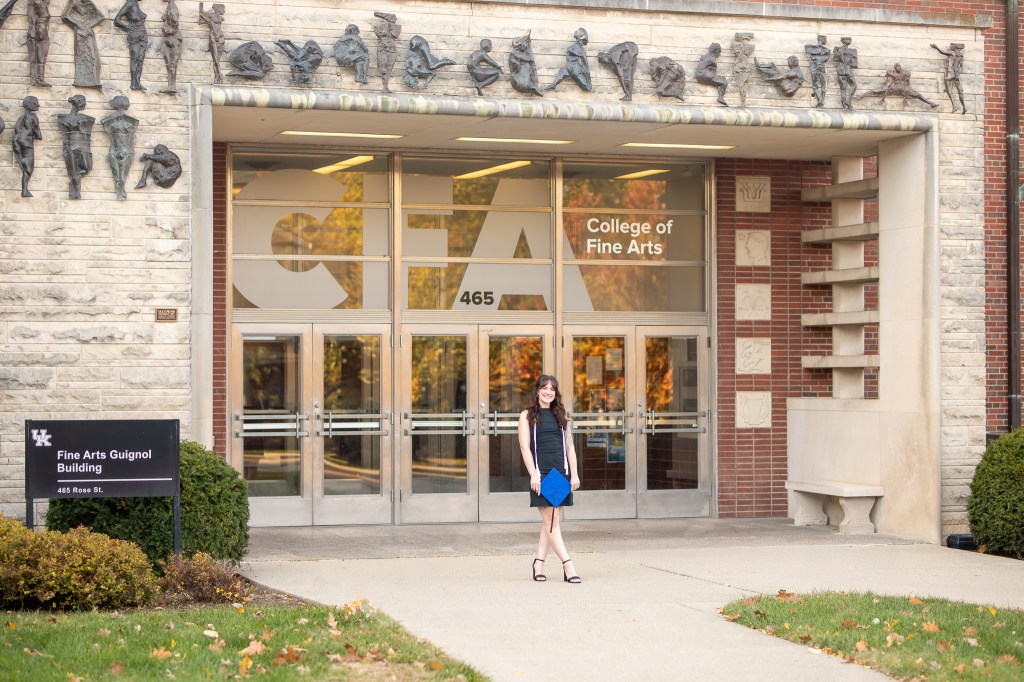
In my time as a student, I worked closely in nonprofit arts organizations through internships. These organizations were operating with insanely limited budgets, and they were always genuinely grateful for the support interns could provide. I was also grateful for the experience because it gave me access to spaces and projects I wouldn’t have otherwise been part of, and I learned a lot very quickly.
That said, it also gave me a very clear picture of what working in the nonprofit arts often looks like on the inside, almost like that’s what an internship is supposed to do!
Nonprofit leaders are often wearing approximately 50 hats simultaneously. My classmates and I were often reminded of this fact in arts admin classes. Artistic directors are also volunteer managers, financial managers, teachers, social media coordinators, grant writers, crisis responders, and only occasionally: human beings.I realized that I wanted a job. Not fifteen.
I also began to struggle morally with advocacy on a larger scale.
In my last semester, I took an arts advocacy class that I really loved. I thought it would feel empowering, like I was learning how to protect and uplift the arts in meaningful ways. In fact, I went into arts administration because I was so deadset on being the person who lobbied and advocated for funding for the arts. It was my driving force to go back to school!
But then we were watching major political shifts unfold in real time: policy changes, funding uncertainty, and the general slow-motion chaos of everything happening everywhere, all at once. Trump taking office a second time opened my eyes to just how rocky the ground I was standing on was. Every class, the rules were changing. We’d visit the white house website and marvel together at how quickly changes were taking place. What was supposed to feel motivating started to feel like emotional whiplash.
It began to raise questions for me like: if SNAP benefits are getting cut, how exactly am I supposed to walk into a meeting with a legislator and passionately argue for the importance of community arts programming? How can I tell leaders to pick arts organizations over domestic violence shelters? If these cuts are out of our control, why would I choose to go full force for arts over human needs? I stand by the benefits of the arts in community settings, but it felt like my priorities were scrambled. It started to feel like I was being asked to emotionally and politically sprint in circles while also smiling about it like a good little constituent.
I also realized that I really want need the arts to stay a safe place for me.
Focusing on constantly shifting policy, chronic underfunding, and systemic burnout felt like a very efficient way to lose my love for the thing I actually care about. And I don’t want to do that to myself. So I made a decision that might sound dramatic but felt very practical at the time: I distanced myself in order to preserve the sacredness of it. Just because I dedicated my degree to the arts, does not mean that my professional life has to follow suit. I went back to school and studied arts administration and dance because I wanted to finish my degree and I wanted to enjoy my classes, not because I’m married to being an administrative professional in a nonprofit arts org.
I want the arts in my life to feel like joy, not obligation. Like something I return to, not something (like healthcare) that I have to recover from.
There is also the very unglamorous reality that I would like to make enough money to survive and have good health insurance!! Not a revolutionary thought. Just one that becomes surprisingly relevant when you zoom in on the administrative side of the arts industry and realize that “passion” is often translated as: partial compensation.
I’ve joined two artistic nonprofit boards. I give my time when I can. I show up in ways that feel sustainable instead of extractive. I write emails to representatives, advocate for organizations I care about, and try to stay involved without getting emotionally swallowed by a system that I can’t personally fix. If there’s anything working in healthcare has taught me, it’s that my obsession with systems leads me to burnout and unfortunately, the arts are no different.
I still care deeply about the arts. I just care about them in a way that doesn’t require me to set myself on fire to prove it. Maybe someday I’ll feel that the political landscape has shifted and that I can feel stability while working in the arts, but for now it’s a no brainer and it isn’t heartbreaking.

 Katie
Katie 
Leave a comment