You don’t leave it behind so much as you learn where to put it.
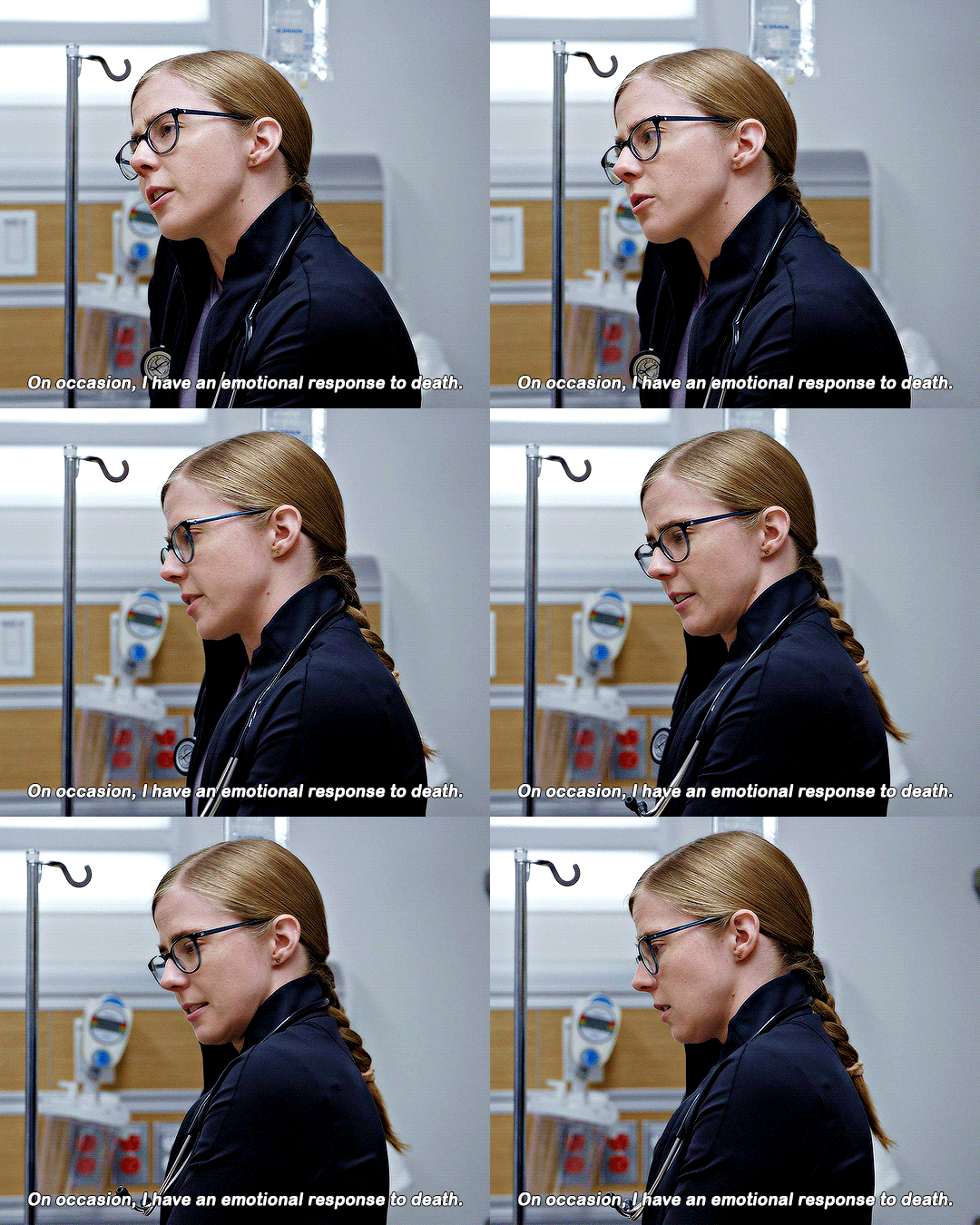
Like most people, I am absolutely obsessed with the HBO series, The Pitt. There are many moments where everything is happening at once. Phones are ringing, monitors are beeping, patients are talking over each other, a doctor rushes past the desk into a room. And in the middle of it all, the clerk is just there. Not making decisions. Not delivering care. But close enough to feel everything happening anyway.
Watching that scene didn’t feel like I was watching my Thursday TV show. It felt like recognition.
It made me think about something I am still trying to understand, process, and figure out. What it means to carry a world you no longer live inside.
Right now, I am in a weird in-between phase, relearning how to exist in a life that is not healthcare. I am learning how to do long, sustained work instead of living in sudden bursts of adrenaline. I am learning that mistakes at work do not carry the same weight anymore. They are no longer tied to delayed care or life-or-death outcomes.
My life used to revolve around sleep, or more accurately, the lack of it. Naps at odd hours, trying to force a schedule that never quite worked, planning rest like it was something I had to outsmart. Nights blurred into mornings, my morning naps blurred into my classes, and everything just felt… blurry. And there was always a fucking beeping sound somewhere.
And like in The Pitt, even when you are not the one making life-or-death decisions, you still carry the weight of everything happening around you.
Life in the hospital felt like a revolving door of nurses. New faces constantly coming in, and just as often, standing at the nurses station in tears, overwhelmed and questioning everything, until eventually, they were gone too. The ones who stayed were usually burned out in a different way, like something in them had been switched off so they could survive shift after shift.
But what I remember just as clearly is how strong they were.
I watched nurses cry from exhaustion, frustration, and fear, and then turn around and keep going. Nurses would talk to me in quiet in-between moments, not as authority figures, but as people who were just barely holding it together. People leaving abusive relationships, dealing with illness in their families, navigating pregnancy alone, carrying grief that never left them at the door. And still, they would reset. They would take the next call, handle the next crisis, and steady the room again.
Now, I go to sleep at normal hours. I wake up in the morning. There is no constant noise, no alarms, no sense that something urgent could happen at any second. I have fewer nightmares about being back in the hospital. And finally, I no longer hear the phantom beeps.
That alone should feel like relief. And in a lot of ways, it is!
But it is not that simple.
A 12-hour shift used to leave me in a different state every time. Sometimes I drove home in silence, trying to process everything I had witnessed. Sometimes I replayed conversations over and over in my head. Sometimes I cried. Sometimes I was so exhausted I’m really not sure how I made it home at all.
And still, there are parts of that version of my life I am proud of.
The people, mostly. The kind of closeness you build in healthcare is hard to explain unless you have lived it. It is a family, even when it is formed through pressure, stress, and shared trauma. There is something about being in it together that stays with you.
But there were things that wore me down quietly over time.
One of the hardest parts was watching patients not trust the people trying to help them. In fact, in The Pitt finale, my jaw was on the floor as I witnessed something on screen that I know all too well in real life. A pregnant woman with extreme preeclampsia, no prenatal care, insistent on a “wild pregnancy” and refusing medical care. I’ve already forgotten which character said it, but I screamed in agreement when they finally said, “WHY ARE YOU IN THE HOSPITAL??” That distrust of the system and of providers would lead to refusals of care, which sometimes led to outcomes that did not have to happen. And then the weight of that did not disappear when the shift ended. It stayed with the nurses, the staff, everyone involved. One day, I’ll dive deeper into the distrust of the medical system and the outcomes that it has for all involved, but not today.
In labor and delivery, that weight showed up in different ways. Sometimes it was joy that felt so very fragile. Sometimes it was loss that arrived without warning or reason. Sometimes it was receiving news that changed everything in a single moment, with no right words available.
And threaded through all of that were realities that stay with you. Substance use, violence, fear, and systems that failed people (and babies) long before they ever even reached the hospital room.
These are not stories you tell freely. They become something else entirely. They are shared only with the people who were there too, passed back and forth in quiet “remember when” 3am conversations that are dark, sometimes funny, sometimes painful, and sometimes both.
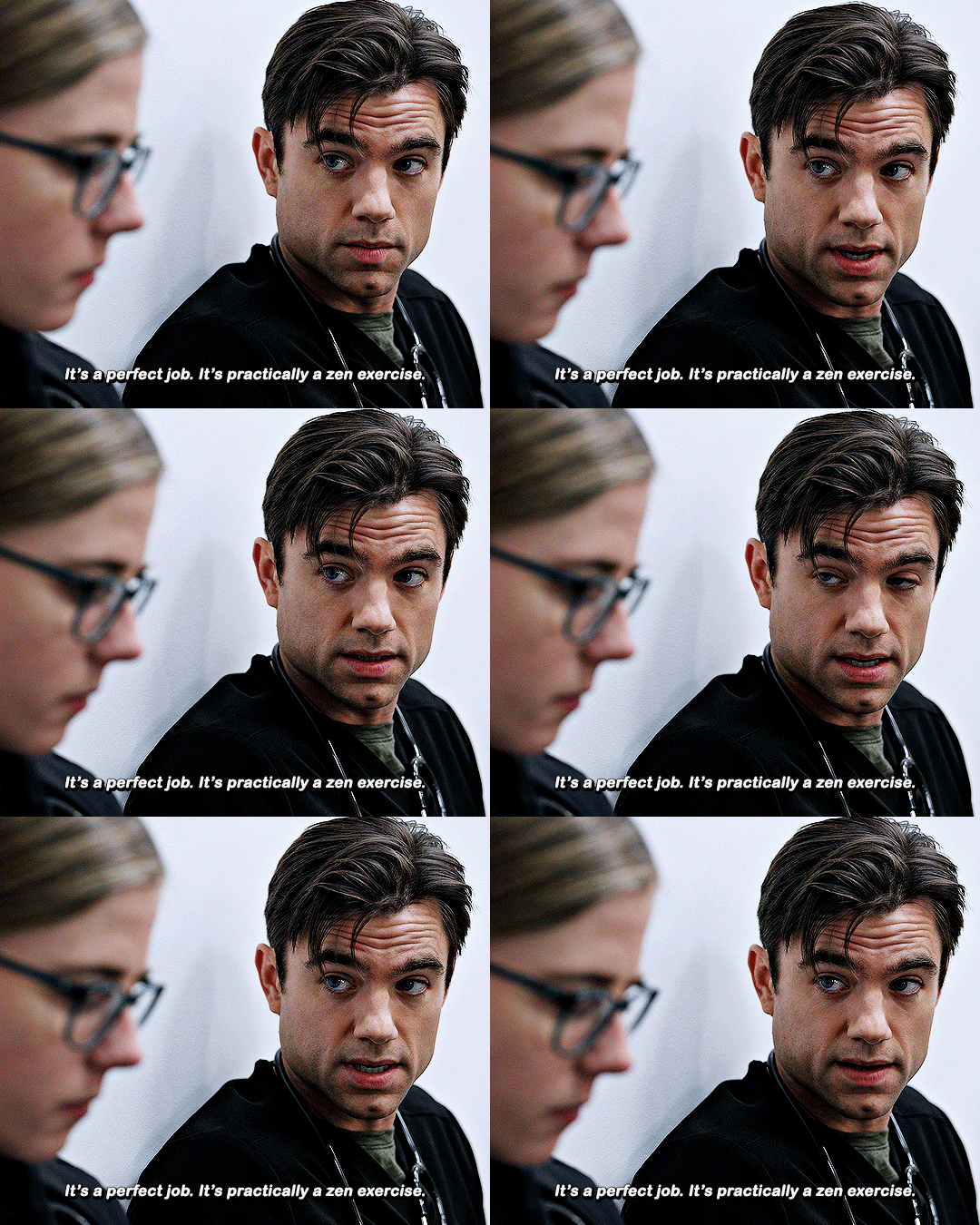
That kind of emotional residue builds over time.
I miss the adrenaline. The feeling that something mattered right now. I miss the camaraderie, the closeness that comes from going through something intense with other people, even if that closeness was sometimes just survival.
This phase is not bad. It is just unfamiliar.
Either way, I am here.
And I keep thinking about the people still inside it. The nurses, the techs, the clerks. The ones who stay. The ones who absorb everything and keep going anyway.
Their resilience is not abstract. It is daily, exhausting, and deeply human. I understood it while I was there. I understand it differently now.
Watching The Pitt, I keep coming back to that feeling of recognition. The mental health of healthcare workers needs to be a topic of conversation. Even though it is a television show, the situations, the pressure, and the emotional weight feel familiar in a way that is hard to explain unless you have lived it.
While I’m outside of that system now, not a day goes by that it isn’t at the forefront of my mind. The convoluted threads of that system, the people who shape it, the people who create and reinforce it, and the super humans who do the actual work inside it.
And maybe that’s the part that stays with me the most.
Not just the chaos, or the intensity, or even the accuracy, but the reminder that none of it is fiction to the people still living it.
Because for them, it doesn’t end when the episode does.

 Katie
Katie 
Leave a comment